

Peptide Therapeutics Market Size to Surpass USD 87.21 Billion by 2035 Driven by Rising Cancer, Diabetes, and Demand for Targeted Therapies
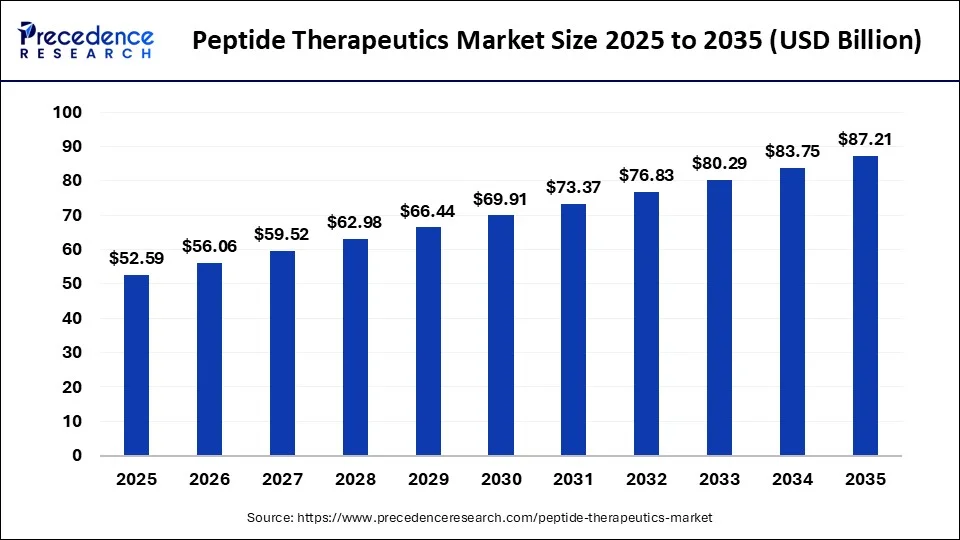
According to Precedence Research, the global peptide therapeutics market size is projected to surpass USD 87.21 billion by 2035 from USD 52.59 billion in 2025, with a CAGR of 5.19% from 2026 to 2035. North America currently dominates the market due to strong healthcare infrastructure and innovation, while Asia Pacific is expected to register the fastest growth. Expanding applications in metabolic disorders, oncology, and neurology continue to position peptide therapeutics as a critical pillar in next-generation drug development.
Ottawa, Dec. 18, 2025 (GLOBE NEWSWIRE) -- The global peptide therapeutics market is witnessing strong growth, driven by the rising prevalence of chronic diseases such as cancer, diabetes, cardiovascular, and neurological disorders. Valued at USD 52.59 billion in 2025, the market is expected to reach approximately USD 87.21 billion by 2035, growing at a CAGR of 5.19% between 2026 and 2035. Increasing demand for targeted and personalized treatments, rapid advancements in peptide synthesis and drug delivery technologies, and growing investments in R&D are accelerating market expansion
The Complete Study is Now Available for Immediate Access | Download the Sample Pages of this Report@ https://www.precedenceresearch.com/sample/2548
What are Peptide Therapeutics?
Peptide therapeutics are drugs composed of chains of amino acids (peptides) that are used to treat disorders by mimicking natural biological processes, such as acting as hormones or growth factors. They provide advantages such as high target specificity and decreased immunogenicity compared to other drugs, but face challenges such as poor stability and short half-lives, usually requiring parenteral (injection) administration.
Peptide Therapeutics Market Highlights:
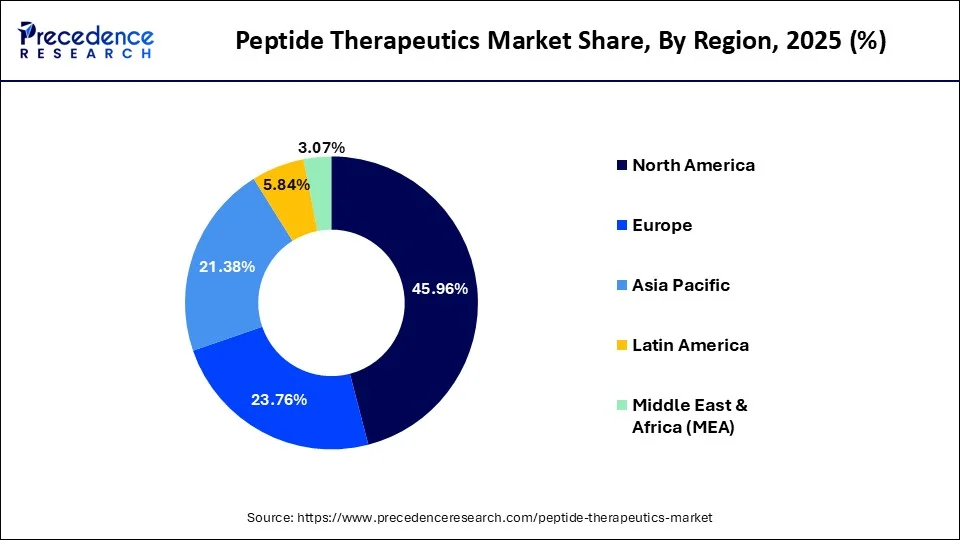
- North America led the global market in 2025, accounting for 45.96% of total revenue, driven by strong R&D activity and advanced healthcare infrastructure.
- Asia Pacific is set to be the fastest-growing region, registering a CAGR of 6.20% (2026–2035) on the back of rising chronic disease burden and expanding biopharma investments.
- By application, the metabolic disorder segment dominated with a 22.80% market share in 2025, supported by strong adoption of GLP-1–based therapies.
- The gastrointestinal disorder segment is expected to grow rapidly at a CAGR of 6.31% (2026–2035), reflecting increasing therapeutic innovation.
- By type, innovative peptide therapeutics captured over 60.40% of revenue in 2025, fueled by high-value, first-in-class drug development.
- The generic segment is projected to expand at a CAGR of 4.76%, driven by patent expirations and rising demand for cost-effective alternatives.
- By route of administration, the parenteral segment remained dominant, generating 76.03% of market revenue in 2025, due to higher bioavailability and clinical effectiveness.
- The oral segment is gaining momentum, expected to grow at a CAGR of 6.02%, supported by advances in oral peptide delivery technologies.
- By distribution channel, hospital pharmacies held a leading 39.90% share in 2025, reflecting their central role in managing complex and chronic conditions.
- Online drug stores are anticipated to grow at a CAGR of 5.51%, driven by increasing digital healthcare adoption and patient convenience.
- By synthesis technology, liquid phase peptide synthesis (LPPS) led the market with a 45.87% share in 2025, owing to its scalability, cost efficiency, and high-purity output.
➡️ Become a valued research partner with us https://www.precedenceresearch.com/schedule-meeting
What are the Major Applications of Peptide Therapeutics?
-
Oncology (Cancer Treatment): Peptides are used as targeted therapies in cancer to interfere with tumor growth, deliver cytotoxic agents, or stimulate the immune response (e.g., peptide vaccines and peptide-drug conjugates).
-
Metabolic Disorders (e.g., Diabetes and Obesity): Peptides such as GLP-1 receptor agonists (e.g., semaglutide) are widely used to regulate insulin secretion, improve glucose control, and support weight management.
-
Cardiovascular Diseases: Peptide drugs help in managing conditions like hypertension and heart failure by modulating blood pressure, vascular tone, and cardiac function.
-
Infectious Diseases: Antimicrobial peptides (AMPs) show promise in combating bacterial, viral, and fungal infections, especially as resistance to traditional antibiotics grows.
-
Neurological Disorders: Peptides are being developed to treat neurodegenerative diseases such as Alzheimer’s, Parkinson’s, and stroke, often by targeting specific brain receptors or enhancing neuroprotection.
Get informed with deep-dive intelligence on AI’s market impact https://www.precedenceresearch.com/ai-precedence
Peptide Therapeutics Market Key Trends
-
Rising demand for targeted and personalized medicine – Peptides offer high selectivity and minimal side effects, making them ideal for precision therapies. This is especially relevant in oncology and rare diseases, where treatment needs to be highly specific.
-
Advancements in drug delivery technologies – New delivery systems like oral formulations, transdermal patches, and nanoparticle carriers are improving the bioavailability and stability of peptide drugs. These innovations are helping overcome traditional limitations such as rapid degradation in the body.
-
Increased R&D investment and strategic collaborations – Pharmaceutical companies are partnering with biotech firms and research institutions to accelerate the development of novel peptide therapies. This collaboration is fueling a rich pipeline of next-generation peptide drugs.
-
Expanding applications in chronic diseases – Peptide therapeutics are being increasingly used to treat conditions like diabetes, obesity, cardiovascular diseases, and autoimmune disorders. Their ability to modulate biological pathways with high precision makes them valuable in long-term disease management.
-
Growing development of synthetic and modified peptides – Advances in peptide synthesis are enabling the creation of more stable and long-acting molecules. Modified peptides also show improved pharmacokinetics and enhanced resistance to enzymatic degradation.
Built for leaders who move markets. Access live, actionable intelligence with Precedence Q. https://www.precedenceresearch.com/precedenceq/
Peptide Therapeutics Market Opportunity
Advancements in Peptide Synthesis and Drug Delivery
They allow the development of more effective, targeted, and safer drugs. Innovations in peptide synthesis create high-purity peptides at lower expenses and scale, while drug delivery systems manage the inherent limitations of peptides, like poor stability and bioavailability, permitting for improved therapeutic efficacy and even patient convenience.
Advances in peptide design and synthesis permit the creation of highly specific peptides that target disease pathways with high precision. This contributes to fewer off-target effects and enhanced therapeutic outcomes.
Peptide Therapeutics Market Key Challenge
Complex Manufacturing Processes
Due to the high resource needs, intricate multi-step synthesis, and significant challenges in achieving high purity and even consistent quality, mainly at scale. Scaling up peptide production from laboratory to commercial scale is costly and presents a remarkable risk of failure.
The high cost linked with these complex processes can pose commercial difficulties in peptide drug development. Many complex peptides need modifications to enhance stability, like disulfide bonds or a few conjugations, which thus complicate the synthesis and purification process.
➤ Get the Full Report @ https://www.precedenceresearch.com/peptide-therapeutics-market
Peptide Therapeutics Market Report Coverage
| Report Coverage | Details |
| Market Size (2025) | USD 52.59 Billion |
| Market Size (2026) | USD 56.06 Billion (Projected) |
| Market Size (2035) | USD 87.21 Billion (Forecast) |
| Growth Rate (2026–2035) | CAGR of 5.19% |
| Base Year | 2025 |
| Forecast Period | 2026 to 2035 |
| Largest Regional Market | North America (approx. 45.96% share) |
| Fastest–Growing Regional Market | Asia Pacific (CAGR ~6.20%) |
| Segments Covered | By Application, By Type, By Route of Administration, By Distribution Channel, By Synthesis Technology |
| Regions Covered | North America, Europe, Asia-Pacific, Latin America, Middle East & Africa |
| Key Market Drivers | Rising chronic disease burden, demand for precision and personalized therapies, technological advancements in peptide synthesis and delivery |
| Major Challenges | Complex and costly peptide manufacturing, short biological half-life of peptide drugs |
| Key Technology Trends | AI-assisted peptide design and predictive synthesis optimization, growth of hybrid synthesis platforms |
| Notable Market Dynamics | Increased investment in peptide R&D, generic peptide launches post-patent expiry, strategic CDMO capacity expansions |
For inquiries regarding discounts, bulk purchases, or customization requests, please contact us at sales@precedenceresearch.com
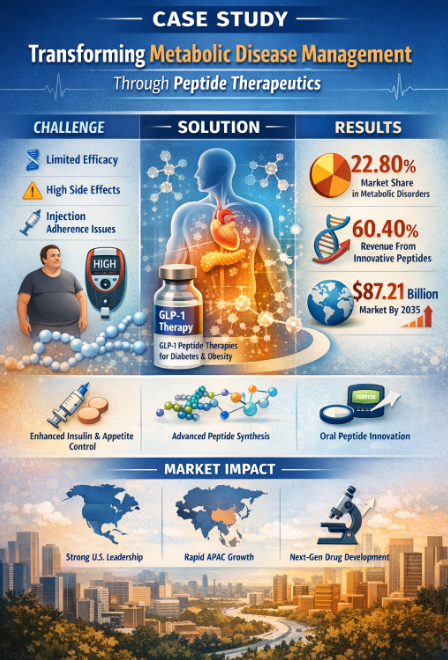
Case Study: Transforming Metabolic Disease Management Through Peptide Therapeutics
Background
Metabolic disorders, particularly type 2 diabetes and obesity, represent one of the fastest-growing global health challenges. Rising prevalence, long-term disease burden, and the need for effective yet patient-friendly treatments have driven pharmaceutical companies to seek highly targeted therapeutic solutions. Peptide therapeutics—especially GLP-1 receptor agonists—have emerged as a breakthrough class addressing these unmet needs.
Challenge
Traditional small-molecule therapies often struggle with:
- Limited target specificity
- Higher risk of systemic side effects
- Inadequate long-term weight and glucose control
Additionally, injectable delivery methods have historically limited patient adherence, while scaling peptide manufacturing posed cost and complexity challenges.
Solution
Leading pharmaceutical companies, including Eli Lilly, invested heavily in innovative peptide therapeutics targeting metabolic pathways. By leveraging:
- Advanced peptide synthesis technologies
- Long-acting peptide modifications
- Improved delivery systems
GLP-1–based peptide drugs were developed to enhance insulin secretion, regulate appetite, and improve metabolic outcomes with greater precision and safety.
Implementation
- Clinical Deployment: Peptide-based GLP-1 therapies were introduced across hospitals and specialty clinics, supported by strong physician adoption.
- Manufacturing Scale-Up: Liquid Phase Peptide Synthesis (LPPS) enabled cost-effective, large-scale production with high purity.
-
R&D Expansion: Continued investment in oral peptide formulations aimed to improve patient convenience and compliance.
Results
- Significant improvement in glycemic control and weight management outcomes
- Strong patient adherence despite injectable routes
- Rapid commercial success, contributing to the metabolic disorder segment capturing 22.80% of the global peptide therapeutics market in 2025
- Reinforced dominance of the innovative peptide segment, which accounted for over 60.40% of market revenue
Market Impact
This case directly reflects broader market trends:
- Accelerated growth of peptide therapeutics in chronic disease management
- Increased investment in next-generation peptide pipelines
- Strong market leadership in North America, with expanding adoption in Asia Pacific
The success of peptide-based metabolic therapies underscores why the global peptide therapeutics market is projected to surpass USD 87.21 billion by 2035, driven by precision medicine, technological advancements, and expanding clinical applications.
Key Takeaway
Peptide therapeutics are no longer niche biologics—they are reshaping the future of chronic disease treatment. Their success in metabolic disorders serves as a powerful blueprint for expanding applications in oncology, neurology, and cardiovascular care, positioning peptides as a cornerstone of next-generation drug development.
Immediate Delivery Available | Buy This Premium Research Report@ https://www.precedenceresearch.com/checkout/2548
Peptide Therapeutics Market Regional Outlook
How did North America Dominate the Peptide Therapeutics Market?
North America dominates the global market with a share of 45.96% in 2024. A significant number of Americans suffer from chronic conditions such as cancer, diabetes, cardiovascular diseases, and obesity, leading to a high need for peptide-based treatments. The growing trend of personalized medicine, as well as the search for highly targeted treatments for specific diseases, drives the need for peptide therapeutics in the region. A well-developed hospital infrastructure, as well as strong healthcare systems, led to the region's ability to accept and offer advanced peptide therapeutics.
The U.S. is a major player in the regional market due to its robust pharmaceutical and biotechnology industry, high investment in R&D, and advanced healthcare infrastructure. The presence of major players like Pfizer, Amgen, and Eli Lilly accelerates the innovation and commercialization of peptide-based drugs. Additionally, the high prevalence of chronic diseases such as diabetes, cancer, and obesity drives strong demand for targeted and effective treatments. The U.S. also benefits from a favorable regulatory environment and early adoption of innovative therapies, further solidifying its leading position in the regional market.
What is the U.S. Peptide Therapeutics Market Size and Growth Rate?
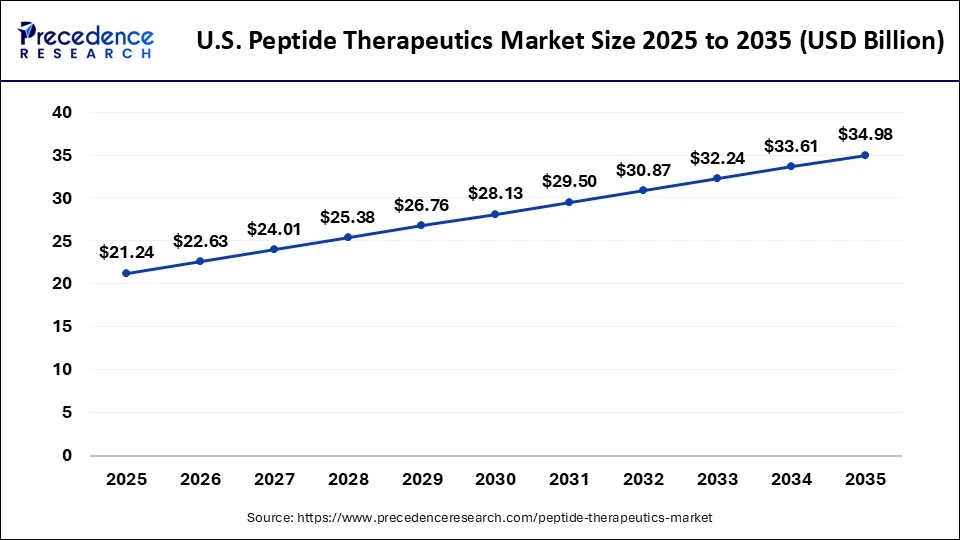
The U.S. peptide therapeutics market is poised for significant expansion, with valuation estimated at USD 21.24 billion in 2025, and projected to exceed nearly USD 34.98 billion by 2035, growing at a healthy compound annual growth rate (CAGR) of 5.12% from 2026 to 2035. This robust growth is driven by rising demand for advanced peptide-based treatments across chronic and complex disease areas, including metabolic disorders, oncology, and cardiovascular conditions — supported by strong innovation, clinical adoption, and continued investment in R&D
Note: This report is readily available for immediate delivery. We can review it with you in a meeting to ensure data reliability and quality for decision-making.
Try Before You Buy – Get the Sample Report@ https://www.precedenceresearch.com/sample/2548
Asia Pacific Peptide Therapeutics Market?
Asia-Pacific is the fastest-growing market with a CAGR of 6.20% between 2025 and 2034, due to an increase in chronic diseases, increased government targets on biopharmaceutical innovation via R&D funding and incentives, rising investments in healthcare infrastructure, and even expanding manufacturing capabilities in countries such as China, India, and South Korea. Increased public knowledge of personalized medicine, together with preventive healthcare, mainly in urban areas, is enhancing product uptake for numerous treatment areas.
Why is Europe Showing Significant Growth in the Peptide Therapeutics Market?
Europe's pharmaceutical industry is a global leader in R&D, featuring significant investment and even innovation in peptide chemistry as well as new therapeutic approaches. Advances in peptide synthesis technologies, which include the development of constrained peptides, have made the advancement of peptide drugs more feasible and efficient.
Country-Level Investments and Funding for the Peptide Therapeutics Industry:
-
United States (USA) - The U.S. leads in peptide therapeutics investments, with major pharma companies like Eli Lilly, Pfizer, and AbbVie pouring funds into R&D, especially in metabolic and oncology-related peptides. Companies such as CordenPharma have also announced multi-billion-dollar investments to expand peptide manufacturing capacity in response to growing global demand.
-
China - China has significantly increased government and private sector investment in peptide drug development. Domestic pharmaceutical firms are expanding manufacturing facilities and forming global partnerships to commercialize GLP-1-based therapies and other peptide innovations.
-
European Union (EU) - The EU, through initiatives like the European Innovation Council, is actively funding peptide research projects, including AI-driven peptide drug design and cancer immunotherapies. Countries such as Spain, Finland, and Germany are receiving grants to support peptide biotech startups and research institutions.
-
Hong Kong (China) - Hong Kong is fostering academic-industry partnerships to drive innovation in peptide drug discovery, with universities collaborating with biotech firms and pharmaceutical research institutes. These efforts are supported by funding incentives aimed at boosting regional competitiveness in biopharma.
-
Germany - Germany is a major hub for peptide therapeutics in Europe, with strong government-backed funding for translational research and clinical trials. Public investment supports academic institutions and biotech companies developing peptide drugs for oncology, neurology, and rare diseases.
You can place an order or ask any questions, please feel free to contact at sales@precedenceresearch.com | +1 804 441 9344
Peptide Therapeutics Market Segmentation Outlook
Application Outlook
Why did the Metabolic Disorder Segment Dominate the Peptide Therapeutics Market?
The metabolic disorder segment dominates the market with a share of 22.80% in 2024, due to the growing global prevalence of chronic conditions such as diabetes and obesity, which are effectively treated by advanced peptide therapies like GLP-1 receptor agonists.
Peptide therapies can be designed to target specific receptors and even enzymes included in metabolic processes, leading to high specificity, enhanced clinical outcomes, and decreased side effects. Peptide-based drugs offer targeted, personalized approaches to handling complex chronic disease pathways, which is vital for enhancing overall clinical outcomes.
The cancer segment is expected to grow fastest in the market with a CAGR of 6.31% during the forecast period, due to the rising global incidence of cancer, a growing need for targeted and personalized treatments, and developments in peptide synthesis and delivery technologies. Increased research and development efforts are targeting novel peptide-based therapies, which include immunotherapies and targeted treatments, to combat numerous forms of cancer.
Peptide-based therapies, including peptide vaccines, peptide-drug conjugates, and receptor-targeting peptides, can effectively interfere with tumor growth, angiogenesis, and metastasis. Additionally, the growing global incidence of cancer and the urgent need for more effective and safer treatment options have driven significant investment and innovation in this area.
Peptide Therapeutics Market Revenue (USD Million), By Application, 2022 to 2024
| Application | 2022 | 2023 | 2024 |
| Gastrointestinal Disorder | 4.31 | 4.61 | 5.01 |
| Metabolic Disorder | 9.92 | 10.46 | 11.20 |
| Neurological Disorder | 3.02 | 3.20 | 3.45 |
| Cancer | 11.64 | 12.38 | 13.36 |
| Others | 14.23 | 15.02 | 16.10 |
Type Outlook
Why did the Innovative Segment Dominate the Peptide Therapeutics Market?
The innovative segment dominated the market with a share of 60.40% in 2024. There are high investments in research and development (R&D), contributing to novel, first-in-class drugs with superior efficacy, targeting capabilities, and even premium pricing. Pharmaceutical firms are heavily investing in the advancement of new and developed peptide-based drugs, contributing to a pipeline of innovative treatments. Due to their novelty and superior advantages, innovative peptide therapeutics can command premium expenses, making them attractive and even profitable for pharmaceutical companies.
The generic segment is the second-largest segment, growing in the market with a CAGR of 4.76%, due to the expiration of patents on branded peptides; there are more affordable and even accessible alternatives.
Generic peptides provide cost-effective alternatives, raising their accessibility for a wider patient population, mainly in developing countries with a significant need for affordable treatments. Pharmaceutical firms are increasing investments in research and development, which indirectly advantages the generic market by creating more innovative peptides that will eventually have generic alternatives.
Route of Administration Outlook
Why did the Parenteral Segment Dominate the Peptide Therapeutics Market?
In 2024, the parenteral segment dominated the market with a share of 76.03%. Peptides are complex molecules that are easily broken down by enzymes in the digestive tract, making it challenging for them to reach the bloodstream in sufficient quantities when taken orally. Many peptide-based drugs, like insulin and GLP-1 receptor agonists, treat chronic conditions such as cancer, diabetes, and cardiovascular diseases, where rapid as well as consistent delivery is crucial for managing symptoms.
Peptides are easily degraded by digestive enzymes and have low absorption when taken orally, making injections (such as subcutaneous, intravenous, or intramuscular routes) the most effective way to deliver them into the bloodstream with sufficient therapeutic effect.
The oral segment is expected to grow fastest in the market with a CAGR of 6.02% during the forecast period. New technologies and formulation methods are making it possible for peptides to remain stable in the gastrointestinal tract and even be absorbed into the body, overcoming previous challenges such as rapid degradation.
Patients generally choose oral medications because of convenience and ease of administration, which contributes to better compliance and even health results. Pharmaceutical firms are investing heavily in research and development to make more effective oral protein and even peptide-based therapeutics. Regulatory bodies are offering flexibility and funding for the development and acceptance of novel oral peptide drugs, thus fostering market expansion.
Peptide Therapeutics Market Revenue (USD Million), By Route of Administration, 2022 to 2024
| Route of Administration | 2022 | 2023 | 2024 |
| Oral | 4.43 | 4.72 | 5.12 |
| Parenteral | 32.77 | 34.72 | 37.35 |
| Pulmonary | 2.59 | 2.74 | 2.94 |
| Mucosal | 1.72 | 1.82 | 1.95 |
| Others | 1.60 | 1.67 | 1.76 |
Distribution Channel Outlook
Why did the Hospital Pharmacies Segment Dominate the Peptide Therapeutics Market?
The hospital pharmacies segment dominates the market with a share of 39.90% in 2024. Hospitals are the primary treatment centers for severe and complex diseases, like multidrug-resistant infections and chronic illnesses such as diabetes and cancer, which are usually managed with peptide drugs.
Hospitals handle a large volume of patients with chronic and severe conditions like cancer, diabetes, and autoimmune diseases, key areas where peptide therapies are commonly used. This central role in patient care, combined with the need for professional handling and monitoring of peptide drugs, makes hospital pharmacies the leading distribution channel in the market.
The online drug stores segment is projected to grow fastest with a CAGR of 5.51% in the market during the forecast period. Online drug stores provide patients with greater accessibility to peptide therapeutics, mainly for those with restricted access to physical pharmacies or who live in remote areas. The convenience of online ordering and even home delivery thus contributes to their popularity. Increased patient knowledge of the benefits of peptide therapies and the growth of direct-to-consumer brands and even longevity clinics have normalized the usage of these treatments and boosted demand.
Synthesis Technology Outlook
Why did the Liquid Phase Peptide Synthesis (LPPS) Segment Dominate the Peptide Therapeutics Market?
The liquid phase peptide synthesis (LPPS) segment dominated the market with a share of 45.87% in 2024, due to its cost-effectiveness, scalability for large-volume manufacturing of simple peptides, and superior control over reaction conditions, which contribute to high yields and even purity suitable for regulatory approval. Liquid phase peptide synthesis (LPPS) allows for better control over reaction conditions, resulting in fewer by-products and higher-quality peptides compared to some other methods.
Additionally, LPPS is well-suited for large-scale manufacturing, which is essential to meet the growing demand for peptide drugs in various therapeutic areas. Its flexibility and efficiency in synthesizing peptides with precise sequences make it a preferred choice for many pharmaceutical companies, driving its dominance in the market.
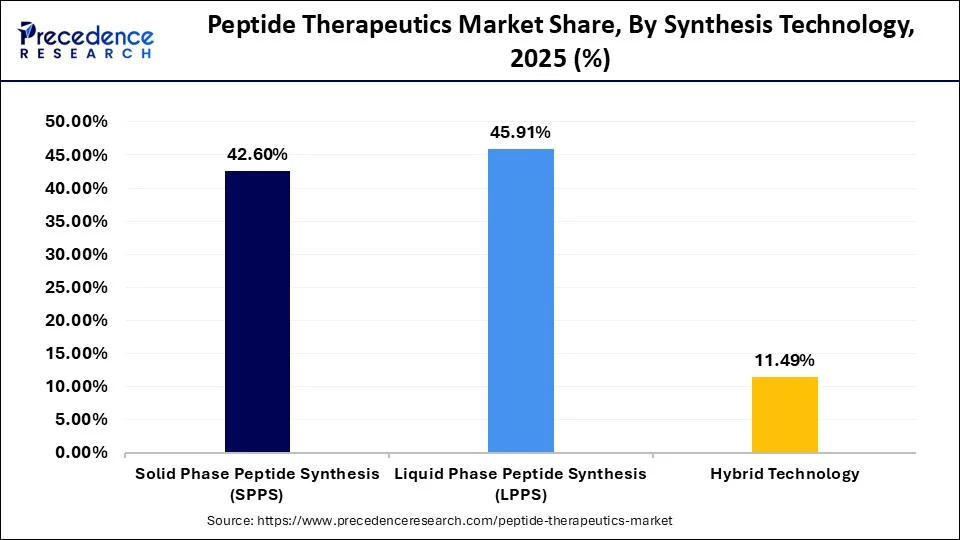
The solid phase peptide synthesis (spps) segment is the fastest-growing segment in the market, due to its high efficiency, scalability, and even ability to manufacture high-purity peptides, which are important for developing new drugs. It permits the stepwise addition of amino acids to a solid support, along with simplifying purification and permitting the generation of highly pure peptides needed for therapeutic use. Peptides show promising outcomes in treating diseases such as cancer, metabolic disorders, and even cardiovascular conditions, leading to increased usage of peptide therapeutics and a corresponding demand for efficient synthesis.
✚ Related Topics You May Find Useful:
➡️ Peptide Therapeutics CDMO Market: Explore how outsourcing in peptide therapeutics is shaping efficiency and innovation.
➡️ Peptide Therapeutics Contract API Manufacturing Market: Discover the growing role of contract API manufacturing in accelerating peptide drug development.
➡️ Peptide Synthesis Market: Track advances in peptide synthesis technologies driving research and pharmaceutical applications.
➡️ Peptide API Market: Understand the surge in active peptide ingredients powering next-gen therapeutics.
➡️ Cell Penetrating Peptide Market: Learn how innovative peptides are enabling targeted drug delivery solutions.
➡️ Small Molecule Drug Discovery Market: See how small molecules remain pivotal in novel drug discovery pipelines.
➡️ Allergy Diagnostics and Therapeutics Market: Explore trends in diagnostics and therapies addressing rising allergy prevalence.
➡️ Gene Therapy Market: Analyze the rapid expansion of gene therapy solutions transforming modern medicine.
➡️ Tuna Peptides Market: Discover growing consumer demand for health-enhancing marine peptides.
➡️ Aptamers Market: Track innovations in aptamer technologies driving diagnostics and therapeutic applications.
Peptide Therapeutics Market Top Companies and Market Concentration
-
Eli Lilly & Company - Eli Lilly is actively involved in peptide therapeutics, notably through its development of glucagon-like peptide-1 (GLP-1) receptor agonists for diabetes and obesity management. The company continues to expand its peptide-based pipeline to address metabolic and endocrine disorders.
-
Amgen Inc. - Amgen has leveraged its expertise in biologics to develop innovative peptide-based therapies, particularly in oncology and bone health. Its research focuses on using synthetic peptides to target specific pathways in chronic diseases.
-
Bausch Health - Bausch Health includes peptide-based drugs in its broad pharmaceutical portfolio, addressing therapeutic areas such as dermatology and gastrointestinal disorders. The company is exploring new formulations to enhance peptide drug delivery.
-
AbbVie - AbbVie is advancing peptide therapeutics through its commitment to targeted treatments in oncology and immunology. The company integrates peptides into its strategy to improve selectivity and minimize side effects in complex diseases.
-
Pfizer, Inc. - Pfizer has developed peptide therapeutics as part of its efforts to innovate in areas like pain management and metabolic disorders. Its research emphasizes optimizing peptide stability and efficacy for clinical applications.
- Ever Neuro Pharma GmbH - Ever Neuro Pharma specializes in neurology-focused peptide therapeutics, particularly for treating neurodegenerative and cerebrovascular conditions. The company is dedicated to developing brain-penetrant peptides with high therapeutic potential.
Market Concentration
| Company | Focus Area | Strategic Highlights |
| Eli Lilly & Company | Diabetes & Obesity | GLP-1 receptor agonists, expanding metabolic/endocrine pipeline |
| Amgen Inc. | Oncology & Bone Health | Synthetic peptides targeting chronic disease pathways |
| Bausch Health | Dermatology & Gastrointestinal | Innovative peptide drug delivery formulations |
| AbbVie | Oncology & Immunology | Targeted peptides for selectivity, reduced side effects |
| Pfizer, Inc. | Pain Management & Metabolic Disorders | Optimized peptide stability and clinical efficacy |
| Ever Neuro Pharma GmbH | Neurology | Brain-penetrant peptides for neurodegenerative disorders |
The peptide therapeutics market is moderately concentrated, with the top 6 companies accounting for approximately 60–65% of the global market in 2025.
Estimated Market Share (% of Global Revenue)
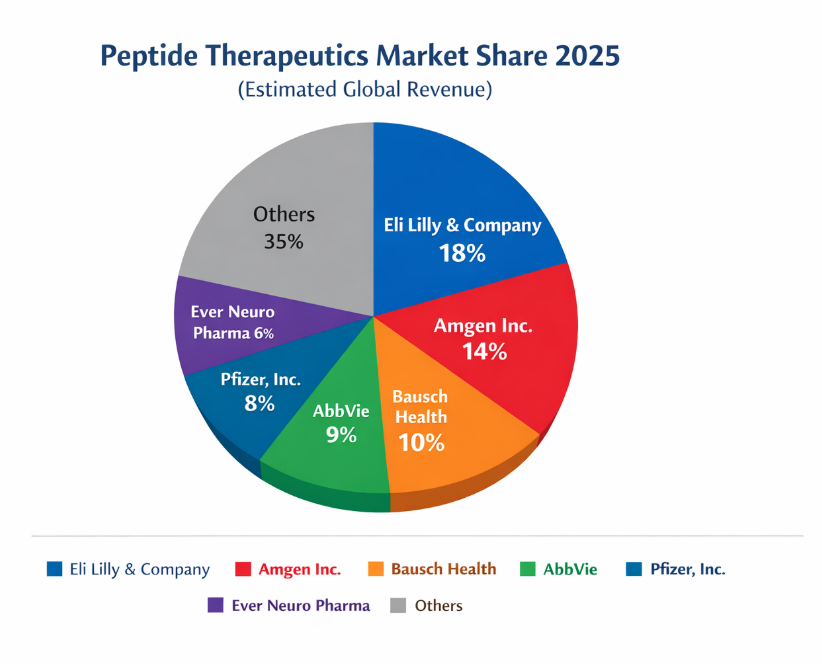
- Eli Lilly & Company – 18%
- Amgen Inc. – 14%
- Bausch Health – 10%
- AbbVie – 9%
- Pfizer, Inc. – 8%
- Ever Neuro Pharma GmbH – 6%
-
Others – 35%
Key Insights:
- Eli Lilly is the market leader due to strong GLP-1 peptide portfolio and diabetes/obesity focus.
- Amgen has substantial market share in oncology and chronic diseases due to synthetic peptide platforms.
- Smaller niche players like Ever Neuro Pharma are gaining attention in neurology, but collectively hold <10% market share.
- The remaining 35% is fragmented among regional players and emerging biotech startups focusing on niche therapeutic areas.
Highlights
- The market shows moderate to high concentration, with 6 major players controlling >60% of the market.
- Therapeutic focus varies: metabolic disorders, oncology, neurology, immunology, dermatology, and gastrointestinal disorders.
- Emerging players are investing in innovative delivery methods, brain-penetrant peptides, and synthetic platforms to capture niche opportunities.
- Growth drivers: rising chronic disease burden, aging population, and advances in peptide synthesis/bioconjugation technologies.
Recent Developments:
- In September 2025, Eli Lilly plans to start its experimental oral weight-loss drug orforglipron in India, providing an option to injectables that many patients in the world's most populous nation resist. Orforglipron follows the same pathway targeted by Eli Lilly's blockbuster tirzepatide and is a part of a new class of GLP-1 drugs that suppress appetite. (Source: https://www.reuters.com)
- In August 2025, AbbVie invested $195 million in its North Chicago, Illinois, manufacturing plant to expand domestic active pharmaceutical ingredient (API) production in the U.S. This growth is part of AbbVie's declared commitment to invest more than $10 billion of capital in the U.S. to widely support innovation and expand critical production capabilities and capacity. ( Source: https://news.abbvie.com)
Segments Covered in the Report
By Application
- Gastrointestinal Disorder
- Metabolic Disorder
- Neurological Disorder
- Cancer
- Others
By Type
- Generic
- Innovative
By Route of Administration
- Oral
- Parenteral
- Pulmonary
- Mucosal
- Others
By Distribution Channel
- Hospital Pharmacies
- Retail Pharmacies
- Online Drug Stores
By Synthesis Technology
- Solid Phase Peptide Synthesis (SPPS)
- Liquid Phase Peptide Synthesis (LPPS)
- Hybrid Technology
By Region
- North America
- U.S.
- Canada
- Europe
- U.K.
- Germany
- France
- Asia-Pacific
- China
- India
- Japan
- South Korea
- Malaysia
- Philippines
- Latin America
- Brazil
- Rest of Latin America
- Middle East & Africa (MEA)
- GCC
- North Africa
- South Africa
- Rest of the Middle East & Africa
Thank you for reading. You can also get individual chapter-wise sections or region-wise report versions, such as North America, Europe, or Asia Pacific.
Immediate Delivery Available | Buy This Premium Research Report@ https://www.precedenceresearch.com/checkout/2548
Stay Ahead with Precedence Research Subscriptions
Unlock exclusive access to powerful market intelligence, real-time data, and forward-looking insights, tailored to your business. From trend tracking to competitive analysis, our subscription plans keep you informed, agile, and ahead of the curve.
Browse Our Subscription Plans@ https://www.precedenceresearch.com/get-a-subscription
About Us
Precedence Research is a worldwide market research and consulting organization. We give an unmatched nature of offering to our customers present all around the globe across industry verticals. Precedence Research has expertise in giving deep-dive market insight along with market intelligence to our customers spread crosswise over various undertakings. We are obliged to serve our different client base present over the enterprises of medicinal services, healthcare, innovation, next-gen technologies, semi-conductors, chemicals, automotive, and aerospace & defense, among different ventures present globally.
Web: https://www.precedenceresearch.com
Our Trusted Data Partners:
Towards Healthcare | Towards Packaging | Towards Automotive | Towards Chem and Materials | Towards FnB | Towards Consumer Goods | Statifacts | Towards EV Solutions | Towards Dental | Nova One Advisor | Market Stats Insight
Get Recent News:
https://www.precedenceresearch.com/news
For the Latest Update Follow Us:
LinkedIn | Medium | Facebook | Twitter
✚ Explore More Market Intelligence from Precedence Research:
➡️ Generative AI in Life Sciences: Explore how AI innovations are revolutionizing drug discovery, research efficiency, and precision medicine.
➡️ Biopharmaceuticals Growth: Understand the accelerating expansion of biologics, therapeutic proteins, and cutting-edge pharma pipelines.
➡️ Digital Therapeutics: Discover how technology-driven treatments are reshaping patient care and improving clinical outcomes.
➡️ Life Sciences Growth: Gain insights into emerging opportunities, market expansion, and innovation trends in the life sciences sector.
➡️ Viral Vector & Gene Therapy Manufacturing: Analyze the production advancements powering next-generation gene therapies and precision medicine.
➡️ Wellness Transformation: See how consumer wellness trends are shaping supplements, functional foods, and lifestyle-driven markets.
➡️ Generative AI in Healthcare: Unlocking Novel Innovations in Medical and Patient Care: Explore AI applications enhancing diagnostics, treatment personalization, and patient engagement.


Legal Disclaimer:
EIN Presswire provides this news content "as is" without warranty of any kind. We do not accept any responsibility or liability for the accuracy, content, images, videos, licenses, completeness, legality, or reliability of the information contained in this article. If you have any complaints or copyright issues related to this article, kindly contact the author above.
