

Your daily news update on Asia and the Pacific
Provided by AGP
China Pavilion Panel at Cannes | When Everyone Becomes a Film Critic
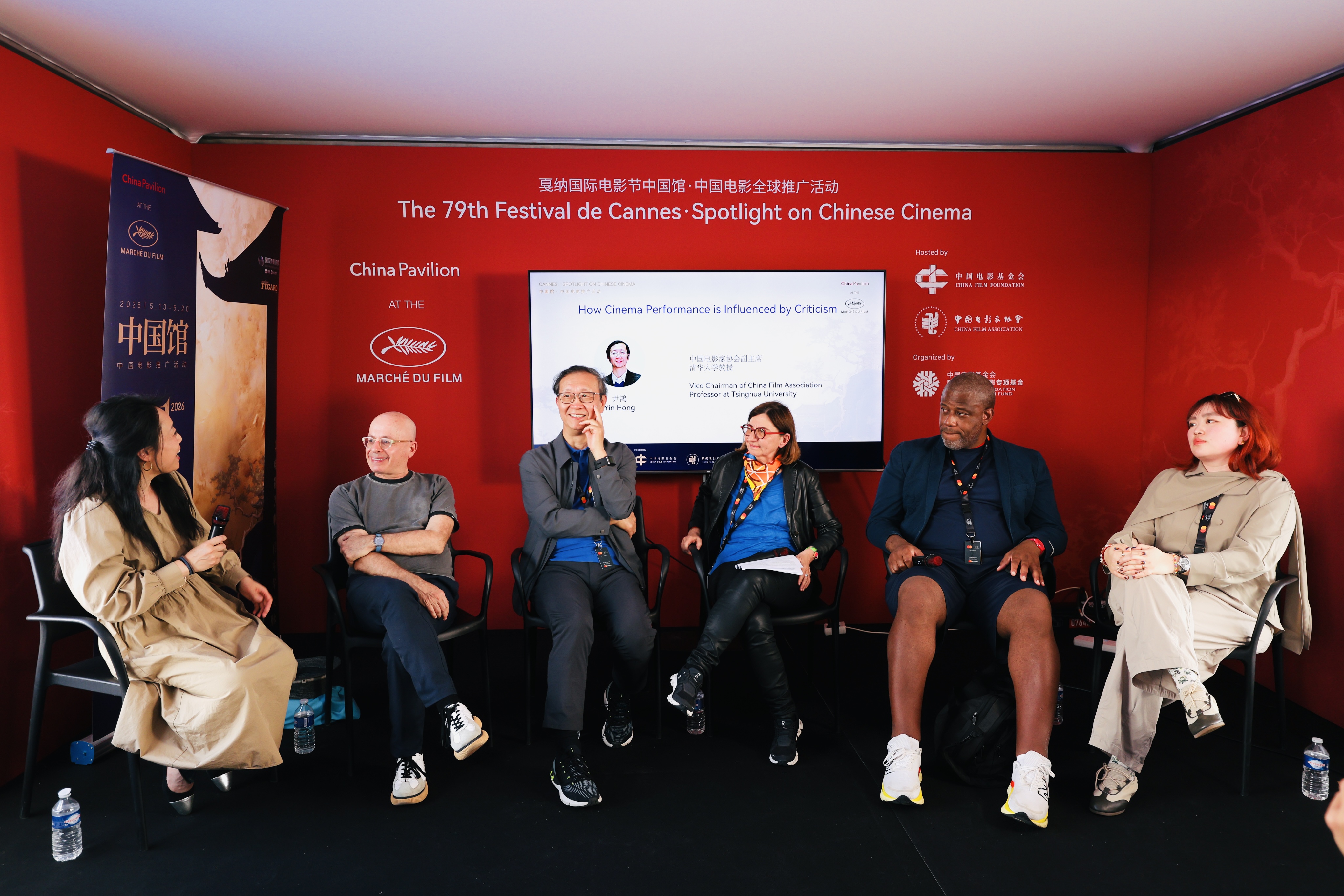
Scenes from the Panel
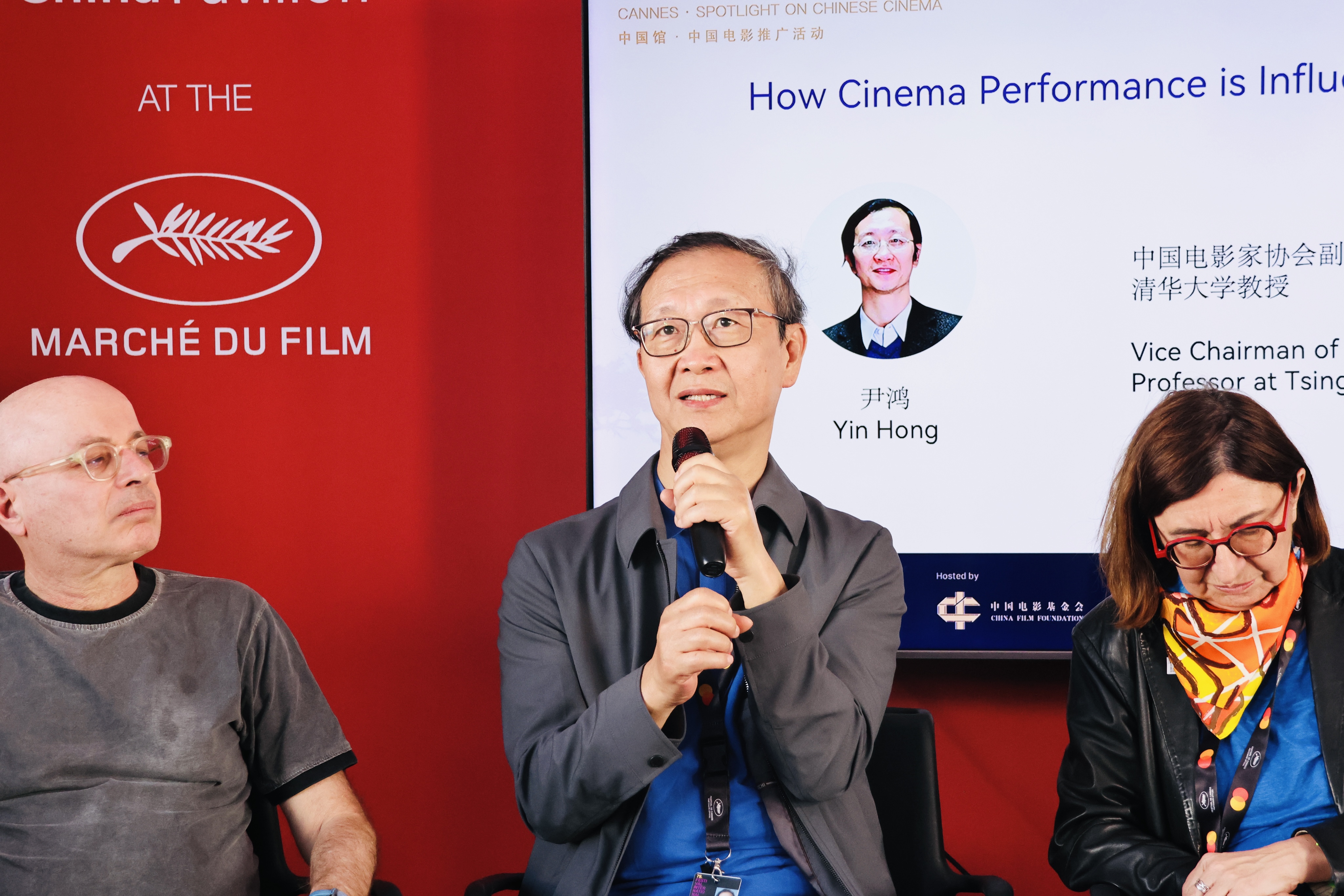
Yin Hong Speaking at the Panel

Group Photo of the Guests
CANNES, FRANCE, May 19, 2026 /EINPresswire.com/ -- On May 14, the panel “How Cinema Performance is Influenced by Criticism” was held at the China Pavilion of the Marché du Film during the 79th Cannes Film Festival. The event was guided by the China Film Administration and jointly hosted by the China Film Foundation and the China Film Association, with organized from the China Film Fundation - Wu Tianming Film Fund for Young Talents.
Film scholars, critics, curators, and international distributors from China, France, Italy, the United States, and Africa gathered to discuss how digital technology, social media, and globalization are reshaping film criticism and audience engagement worldwide.
Among the speakers were Yin Hong, Vice Chairman of the China Film Association and professor at Tsinghua University; Italian sinologist and Specialist in Chinese Cinema, Luisa Prudentino; Ariel Schweitzer, critic for Les Cahiers du Cinéma and professor at Tel Aviv University; Tambay A. Obenson, founder of African Film Press and former senior critic at IndieWire; and Golden Globe voter and international film journalist Li Sixue.
Opening the discussion, Yin Hong noted that China currently operates with two parallel film evaluation systems: traditional professional awards and rapidly evolving online audience platforms. While industry awards continue to represent professional recognition, platforms such as Douban and Maoyan increasingly shape public opinion, box office performance, and cultural discussion.
“Film criticism is no longer controlled exclusively by experts,” Yin said. “Audiences now participate directly in the conversation, and online creators can influence public perception as strongly as traditional critics.” He explained that Chinese film organizations have actively embraced this transformation by inviting digital creators, online reviewers, and younger voices into academic and professional discussions.
Ariel Schweitzer reflected on the pressures facing serious film criticism in the age of instant online reactions. Referencing the legacy of Les Cahiers du Cinéma and the French New Wave tradition, he argued that meaningful criticism requires time for reflection and intellectual distance.
“In today’s media environment, reactions appear online before a screening is even finished,” Schweitzer said. “But cinema still deserves thoughtful criticism, not only immediate judgment.” He also noted that major festivals such as Cannes have adjusted screening schedules in recent years partly in response to the growing influence of social media commentary.
Sinologist, Specialist in Chinese Cinema, Luisa Prudentino shared insights from her 15 years of organizing Chinese film screenings in France. She observed that international audiences are often more deeply moved by authentic human emotions and shared social experiences than by cultural exoticism.
“At first, many viewers were curious about what seemed unfamiliar or exotic in Chinese cinema,” she explained. “But over time, the films that created the strongest emotional response were those about family, young people, work pressure, or relationships between generations. Similarity can become the strongest bridge between cultures.”
The discussion also addressed how independent and regional Chinese productions are finding international audiences. Speakers referenced the recent success of the low-budget Chinese-language film Dear You, which achieved strong word-of-mouth success through audience-driven online recommendations despite limited commercial promotion.
Tambay A. Obenson highlighted similar challenges faced by African cinema in reaching global audiences. He emphasized the importance of film festivals, criticism, and cultural context in helping international viewers engage with films from different regions.
Li Sixue, an international journalist and Golden Globe voter, discussed how global awards voting increasingly reflects cultural diversity. She encouraged greater participation by Chinese journalists and critics in international voting organizations to strengthen the global visibility of Chinese cinema.
The panel also highlighted the growing international presence of young Chinese filmmakers. Although no Chinese-language films entered Cannes’ main competition this year, A Girl Unknown was selected for Critics’ Week, while Tian Tian De Mi Mi and Will It Rain Again Today? were shortlisted for the La Cinef section, reflecting the increasing visibility of a new generation of Chinese filmmakers.
Participants agreed that in an era shaped by globalization, digital platforms, and algorithm-driven communication, sincere, diverse, and culturally distinctive storytelling continues to resonate across borders. The panel further demonstrated the Chinese film industry’s commitment to international dialogue, evolving forms of film criticism, and support for emerging creative talent.
XUE YANG
China Film Foundation
+ +86 189 7136 8217
email us here
Visit us on social media:
Instagram
Other
Legal Disclaimer:
EIN Presswire provides this news content "as is" without warranty of any kind. We do not accept any responsibility or liability for the accuracy, content, images, videos, licenses, completeness, legality, or reliability of the information contained in this article. If you have any complaints or copyright issues related to this article, kindly contact the author above.
